Germany is Europe’s largest economy and a top destination for international businesses and skilled professionals. While the opportunities are enormous, German employment law is one of the most detailed and employee-protective legal systems in the world.
A small mistake in an employment contract, working hours policy, or termination process can quickly lead to costly disputes, penalties, or reputational damage.
This guide from Jaberi Lawyers gives you a clear and practical overview of German Employment Law in 2025, helping employers and employees stay compliant and confident.
The Core Principle of German Employment Law: Employee Protection
At the heart of German employment law lies one fundamental rule: strong protection for employees.
This principle applies throughout the entire employment relationship — from hiring to termination.
German employment rules follow a strict hierarchy:
European Union law
German federal laws
Collective bargaining agreements (Tarifverträge)
Individual employment contracts
👉 An employment contract can never offer worse conditions than those provided by higher-ranking laws or agreements. This ensures fair and consistent protection for all employees.
Employment Contracts in Germany: What Must Be Included
An employment contract is the foundation of every working relationship in Germany.
Although verbal contracts are legally valid, employers are required to provide written documentation of key employment terms under the Verification Act (Nachweisgesetz).
A compliant written contract must clearly state:
Names and addresses of employer and employee
Start date of employment
Job title, duties, and workplace location
Salary details (including bonuses and benefits)
Working hours
Annual leave entitlement
Notice periods for termination
Our advice:
Always use a complete, legally reviewed written contract, even for junior or short-term roles. This is your first and strongest legal safeguard.
Working Hours, Leave, and Sick Pay Explained
Working Hours
Under the Working Hours Act (Arbeitszeitgesetz):
Maximum 8 hours per day on average
Can be extended to 10 hours, provided the average returns to 8 hours within 6 months
Annual Leave
Legal minimum: 20 paid days per year (based on a 5-day work week)
Many employers offer 25–30 days to remain competitive
Sick Leave
Employees are entitled to 100% salary continuation for up to 6 weeks, paid by the employer
Termination of Employment: Why It Requires Special Care
Termination is one of the most sensitive areas of German employment law.
Under the Protection Against Unfair Dismissal Act (Kündigungsschutzgesetz – KSchG), employees in companies with more than 10 employees enjoy strong protection.
A dismissal is only valid if it is based on one of these reasons:
Personal reasons – e.g. long-term illness
Behavioral reasons – e.g. serious misconduct or breach of contract
Operational reasons – e.g. restructuring or business closure
⚠️ Employers must document all issues carefully and, where applicable, involve the Works Council.
Our recommendation:
Never terminate an employee without legal advice. Proper preparation can prevent lawsuits and significant compensation claims.
The Works Council (Betriebsrat): Rights You Must Respect
If a company has five or more employees, they have the right to form a Works Council (Betriebsrat).
The Works Council has co-determination rights, meaning management must involve them in decisions such as:
Working time and overtime rules
Introduction of monitoring or performance systems
Health and safety policies
Collective redundancies or restructuring plans
Key tip:
A cooperative relationship with the Works Council helps avoid conflict and ensures smoother business operations.
Key Employment Law Trends in Germany (2025)
Remote Work
There is no automatic legal right to work from home, but remote and hybrid models are now common.
Best practice:
Create a clear remote work policy covering:
Expectations and availability
Equipment and costs
Data protection and confidentiality
Mandatory Time Tracking
German and EU court rulings require all employers to implement an objective and reliable time-tracking system.
Action point:
Use a digital time-recording solution to remain compliant.
💶 Minimum Wage
Germany’s minimum wage is reviewed regularly by the authorities.
Employers must ensure payroll systems are always updated to reflect the latest rates.
Conclusion: Compliance Is the Key to Stability
German employment law may seem complex, but with the right legal guidance, it becomes manageable.
✔ Clear contracts
✔ Proper documentation
✔ Respect for employee rights
✔ Early legal advice
These steps help build a stable, productive, and legally secure workforce.
Need Expert Support?
At Jaberi Lawyers, we advise employers, employees, and international businesses on all aspects of German employment law — from contracts and compliance to disputes and terminations.
Contact Jaberi Lawyers today to navigate German employment law with confidence and clarity.
Uncategorized
German Employment Law 2025: What Employers and Employees Must Know

News & Insights
Related Blogs
Business & Investor Immigration
Residence Permit By Investment Germany
Germany is an attractive destination for international entrepreneurs and investors. But can investing in Germany actu...
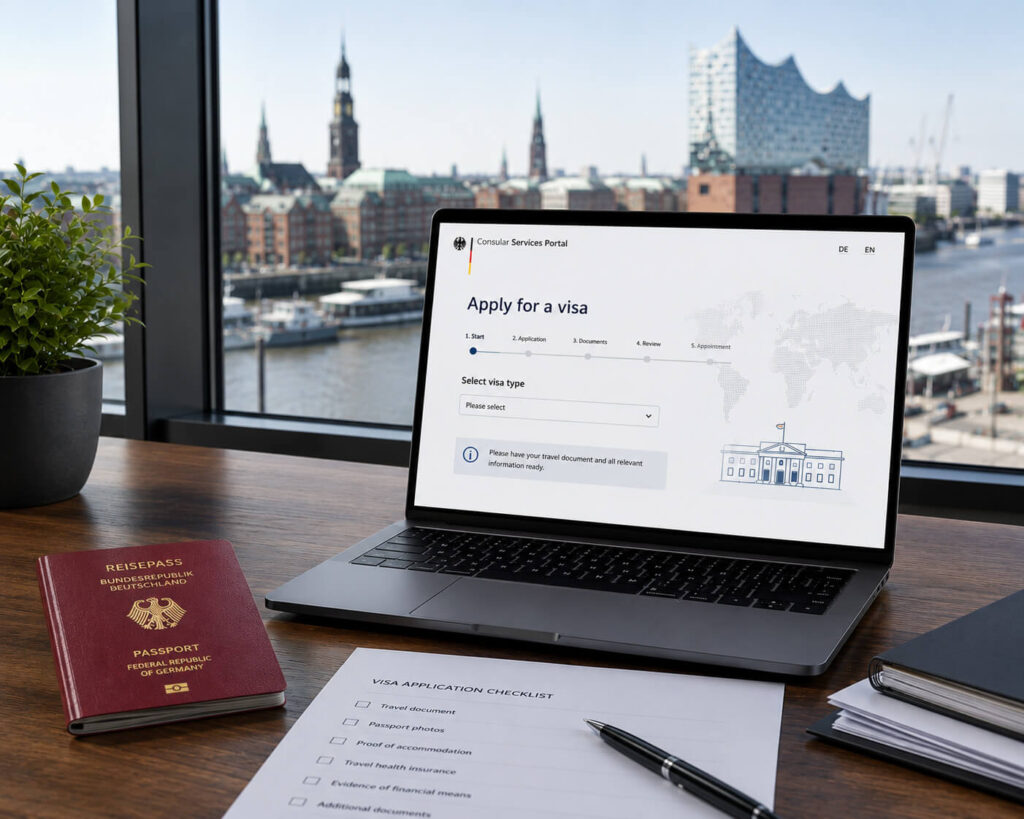
News and Updates
Germany’s Visa Process Goes Digital: What Applicants Need to Know
Applying for a German visa has traditionally involved extensive paperwork, in-person appointments and uncertainty abo...
Residence Permits
EU Blue Card vs Skilled Worker Visa Germany 2026
Receiving a job offer in Germany is a major step. But for many international professionals, it immediately raises ano...