
Protecting Foreign Skilled Workers from Non-EU Countries
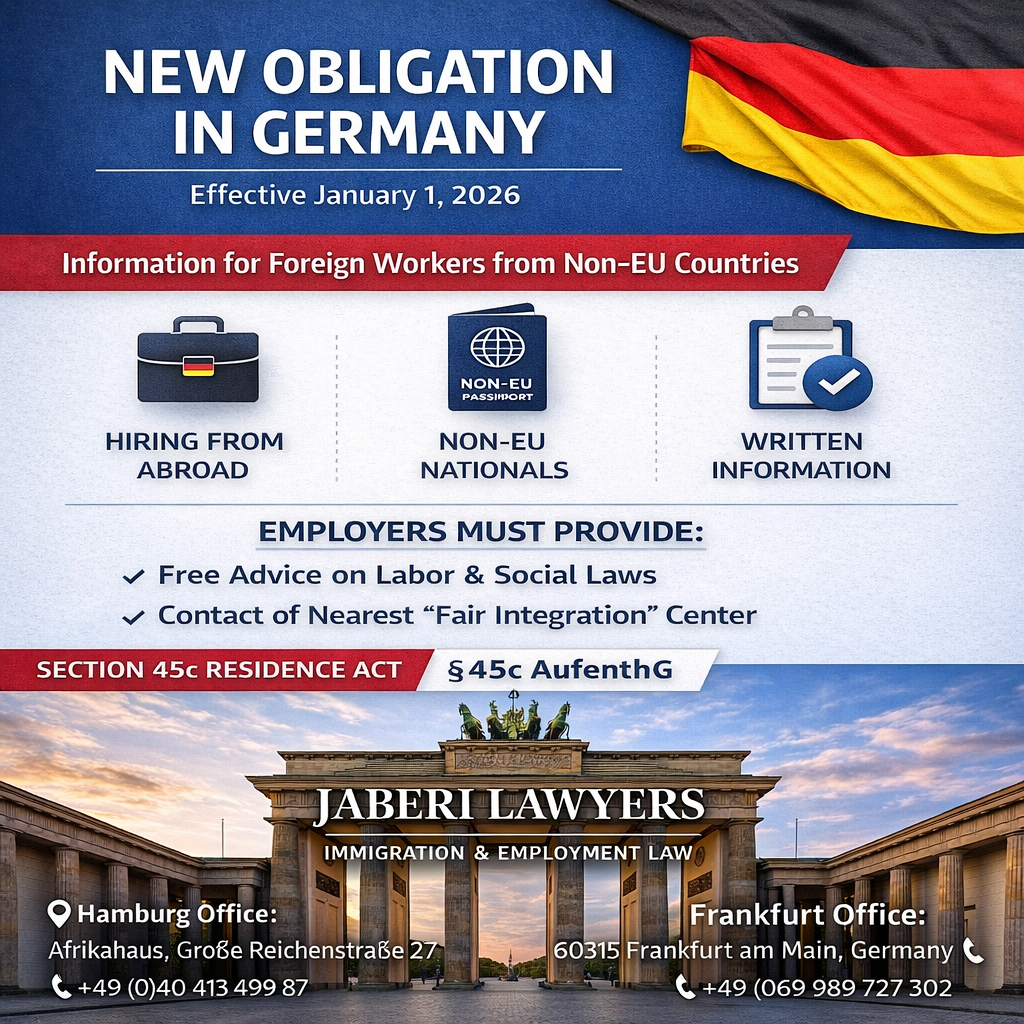
Effective from January 1, 2026, Germany has introduced an important legal amendment aimed at strengthening the protection of foreign workers recruited from non-EU countries. The new regulation, introduced under Section 45c of the German Residence Act (AufenthG), places specific information obligations on employers and enhances transparency for international skilled workers at an early stage of employment.
At Jaberi Lawyers, we outline what this change means for employers and foreign professionals working or planning to work in Germany.
What Is the New Law About?
The new regulation requires German employers who recruit employees directly from third countries to inform them about free advisory and consultation services available to protect their employment rights.
- The objective of this law is clear:
- To prevent exploitation
- To promote fair working conditions
- To ensure that foreign employees are informed of their rights from day one
Who Is Affected by This Regulation?
The law applies when all of the following conditions are met:
The employer is based in Germany
An employment contract is concluded for work in Germany
The employee was living outside Germany at the time the contract was signed
The employee is not a citizen of the EU, EEA, or Switzerland
This applies regardless of:
Whether the employment is subject to social security contributions
Whether a social security exemption applies due to international agreements
Importantly, trainees and apprentices recruited from abroad are also covered.
Who Is Exempt?
The obligation does not apply if:
The employment contract was concluded before January 1, 2026, or
The employee was already residing in Germany when the contract was signed
What Information Must Employers Provide?
Employers must inform affected employees no later than the first day of work. This information may be provided by:
Email
Letter
Attachment to the employment contract
The information must include:
Confirmation that free information and legal advice is available
Reference to the nationwide “Fair Integration” advisory program
Contact details of the nearest Fair Integration advice center to the workplace
The information must be clear, complete, and understandable.
In certain cases, this obligation may be waived if a legally authorized intermediary is already responsible for providing such information.
What Is the “Fair Integration” Advisory Service?
“Fair Integration” is a free, independent, and multilingual advisory service available across all 16 federal states of Germany. It is designed specifically for foreign employees recruited from non-EU countries.
The service provides guidance on:
Employment contracts and working conditions
Wages, minimum wage, and working hours
Leave, termination, and notice periods
Social security obligations
Rights and duties in employment
Residence and integration-related matters
The goal is to prevent misunderstandings, unfair contracts, discrimination, and unlawful employment practices.
Why Was This Obligation Introduced?
Germany has significantly eased access to its labor market through reforms such as:
The Skilled Immigration Act (FEG)
The Opportunity Card
Expanded access to the EU Blue Card
While these reforms focused on attracting skilled workers, Section 45c shifts attention to protecting them once they arrive.
The legislator particularly aims to safeguard workers in sectors with high migrant employment and to reduce the risk of exploitative working conditions.
What Does This Mean for Foreign Skilled Workers?
From 2026 onwards, foreign professionals recruited directly from abroad have a legal right to information.
If an employer fails to provide the required notice:
Workers can still contact Fair Integration centers directly
Advisory services remain free and independent of the employer
Being informed early helps migrants understand their rights and integrate safely into the German labor market.
Transition Phase in 2026
Authorities expect a transition period in early 2026 as employers adjust onboarding procedures and employment documentation.
Currently, no penalties or fines are imposed for non-compliance. However, stricter enforcement may follow if widespread violations are observed.
How Jaberi Lawyers Can Help
At Jaberi Lawyers, we advise:
Employers on compliance with immigration and labor law obligations
Foreign professionals on residence permits, employment rights, and legal protection
Businesses on lawful recruitment of skilled workers from abroad
If you are an employer recruiting from non-EU countries or a foreign professional planning to work in Germany, early legal advice is essential.
📍 Contact Jaberi Lawyers
🌐 www.jaberilawyers.com
📧 contact@jaberilawyers.com