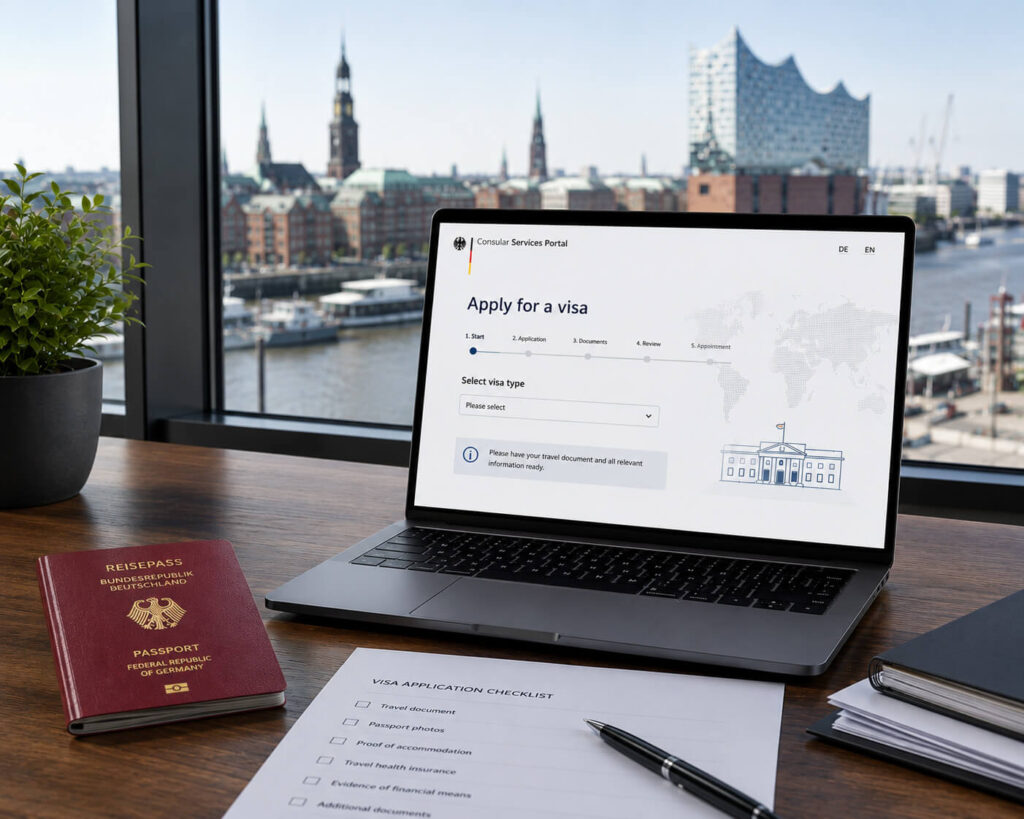
Germany is an attractive destination for international entrepreneurs and investors. But can investing in Germany actually lead to a residence permit?
The short answer is: potentially, yes, but investment alone is not enough.
Germany does not have a traditional “Golden Visa” that automatically grants residency in exchange for a fixed investment. Instead, foreign entrepreneurs may qualify for a residence permit for self-employment under Section 21 of the German Residence Act (AufenthG).
Can You Get German Residency by Investing in a Business?
For entrepreneurs from outside the EU who want to establish and actively operate a business in Germany, Section 21 AufenthG may provide a route to residency.
The authorities generally consider whether there is an economic interest or regional need for the business, whether it is expected to have positive effects on the German economy, and whether its financing is secured.
They may also consider the viability of the business concept, the entrepreneur’s experience, the amount of capital involved, potential employment effects, and contributions to innovation.
In other words, the key question is not simply how much you invest. The quality and economic viability of the business matter too.
Is There a Minimum Investment?
There is no universal fixed investment amount under Section 21 AufenthG that automatically qualifies an applicant for residency.
This is why terms such as “Germany investor visa” can sometimes be misleading.
A significant investment does not guarantee approval. The authorities assess the overall business proposal, its financing, its economic impact, and the applicant’s individual circumstances.
Why Is the Business Plan Important?
A strong business plan is often central to the application.
It should clearly explain the business model, market opportunity, financing, expected revenues and costs, and the applicant’s professional or entrepreneurial experience.
For immigration purposes, the plan should answer four important questions:
- Why this business?
- Why Germany?
- Why this entrepreneur?
- Is the business financially viable?
Is Buying Property or Making a Passive Investment Enough?
Generally, no.
Purchasing German real estate or simply investing capital does not, by itself, create an automatic right to residency.
A residence permit under Section 21 is connected to self-employment and entrepreneurial activity. Investors should therefore understand the immigration implications before committing significant capital or choosing a corporate structure.
Can Entrepreneurs Get Permanent Residence?
Qualifying self-employed entrepreneurs may be able to apply for a settlement permit after three years if the relevant legal requirements are met.
Among other factors, the authorities consider whether the business has developed successfully and can be expected to continue sustainably, as well as whether the applicant can support themselves and their family.
Different rules may apply to freelancers and other residence categories.
Can Your Family Move to Germany?
German immigration law provides routes for family reunification, although the requirements depend on the individual circumstances.
Entrepreneurs planning to relocate with their spouse or children should consider the family’s immigration position as part of their overall residence strategy.
What Should You Consider Before Investing?
Immigration and business planning should ideally happen together.
Before investing in Germany, foreign entrepreneurs should understand:
- Which residence category applies
- How the business should be structured and financed
- What documentation will be required
- How the investment fits into their long-term plans
A commercially attractive investment is not automatically an immigration solution.
The Key Takeaway
Germany can offer attractive opportunities for international entrepreneurs, but there is no simple formula of investing a fixed amount and automatically receiving residency.
For entrepreneurs applying under Section 21 AufenthG, the strength of the business, its financing, its economic relevance, and the applicant’s background all matter.
Jaberi Lawyers advises international entrepreneurs and investors on German immigration and residence law, including residence permits for self-employment.
If you are considering establishing or investing in a business in Germany, obtaining legal advice before committing to a particular structure can help clarify which residence options may be available.
This article provides general information only and does not constitute legal advice. Each residence application is assessed based on its individual circumstances.