The Truth for 2026
Artificial intelligence is everywhere.
ChatGPT can draft cover letters, AI tools can translate documents in seconds, and automated systems are transforming industries across the world. Naturally, many people planning to move to Germany are now asking the same question:
Is AI deciding who gets a German visa?
The answer is no.
While Germany is investing heavily in digitalising its public administration and immigration processes, visa decisions are still made by authorised immigration officials applying German immigration law. AI is increasingly being used to improve administrative efficiency, but it does not replace legal requirements, human judgement or professional legal assessment.
Understanding where AI fits into the immigration process can help you prepare a stronger application, avoid unnecessary delays and separate fact from fiction.
Germany’s Digital Transformation
Germany has been modernising its public administration for several years. Through initiatives such as the Online Access Act (Onlinezugangsgesetz – OZG) and wider digitalisation programmes, government authorities are gradually moving more services online, including parts of the immigration process.
Immigration offices process hundreds of thousands of applications every year for work visas, EU Blue Cards, student visas, family reunification, residence permits, business immigration and citizenship. As application volumes continue to grow, authorities are increasingly adopting digital tools to reduce administrative workloads and improve efficiency.
The goal is not to replace immigration officers. It is to help them process applications more efficiently while allowing them to focus on the legal assessment of each case.
How AI Supports German Visa Processing
Artificial intelligence is primarily used as an administrative support tool rather than a decision-maker.
Depending on the authority and the specific process, AI-assisted technologies may help:
- Organise and categorise visa applications
- Identify incomplete or missing documentation
- Detect duplicate records
- Reduce manual data entry
- Support document verification
- Improve internal workflow management
- Prioritise applications for administrative processing
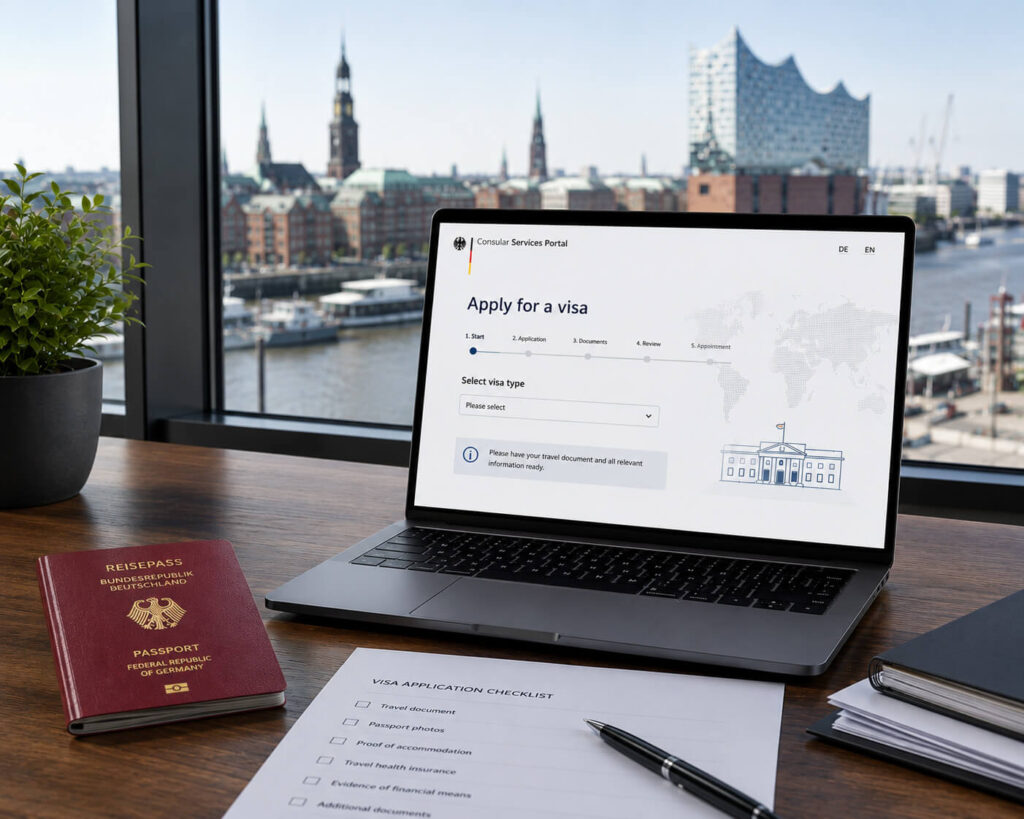
For example, if an applicant submits an expired passport, uploads documents in the wrong format or leaves mandatory sections incomplete, digital systems may flag the application before an immigration officer begins reviewing the legal merits of the case.
This allows officials to spend less time on administrative tasks and more time evaluating applications that require legal analysis.
Can AI Approve or Reject a German Visa?
No.
This is one of the most common misconceptions surrounding AI and immigration.
German visa applications are assessed under German immigration law by authorised officials. Every application must be reviewed against the relevant legal requirements, supporting evidence and the applicant’s individual circumstances.
AI may help organise information or identify administrative issues, but it cannot approve, refuse or legally determine the outcome of your application.
Human oversight remains central to every immigration decision.
Why Accuracy Matters More Than Ever
As immigration systems become increasingly digital, inconsistencies are easier to identify.
Something as simple as conflicting employment dates, missing translations, incomplete documentation or an expired passport may not automatically result in a refusal, but it can trigger requests for additional information, delay processing or create unnecessary complications.
Before submitting your application, make sure you have:
- Accurate personal information
- Complete supporting documentation
- Consistent employment and education records
- Certified translations where required
- Valid passports and identity documents
- Compliance with all application deadlines
A carefully prepared application is still one of the most effective ways to avoid delays.
Can ChatGPT Prepare Your German Visa Application?
Many applicants now use AI tools such as ChatGPT to research visa requirements, draft cover letters or improve the wording of supporting documents.
These tools can certainly be helpful.
However, they have important limitations.
AI cannot assess whether you qualify for a specific residence permit, interpret complex legal provisions, evaluate your immigration history or advise you on the best legal strategy for your individual circumstances.
For example, your application may be affected by:
- Previous visa refusals
- Changes of employer
- Family circumstances
- Criminal records
- Business activities
- Residence history
- Recent changes to German immigration law
These are legal questions, not writing exercises.
Only a qualified immigration lawyer can assess how these factors apply to your specific case.
Common Myths About AI and German Visas
Myth: AI automatically rejects visa applications.
Fact: Visa decisions remain the responsibility of authorised immigration officials applying German immigration law.
Myth: AI can replace an immigration lawyer.
Fact: AI can explain general concepts but cannot provide legal advice, assess your individual circumstances or represent you before German authorities.
Myth: Using ChatGPT guarantees a stronger application.
Fact: A well-written document cannot compensate for missing legal requirements or incomplete evidence.
Myth: Digital processing means faster approvals.
Fact: Processing times still depend on the type of application, the responsible immigration authority, application volumes and whether all required documentation has been provided.
What Applicants Should Focus on in 2026
Whether you are applying for a German work visa, EU Blue Card, residence permit, family reunification visa or another immigration route, your priorities should remain the same.
Make sure your application:
- Meets all legal requirements
- Includes complete and accurate documentation
- Clearly supports the purpose of your stay
- Is submitted within the required deadlines
- Is reviewed by an experienced immigration lawyer where appropriate
Technology can support the process.
Preparation still determines success.
The Future of AI in German Immigration
Artificial intelligence will almost certainly play a larger role in administrative processes over the coming years.
We can expect continued improvements in document processing, workflow automation and digital services as Germany modernises its immigration system.
However, the core principles of German immigration law are unlikely to change.
Legal fairness, transparency, due process and human decision-making will continue to form the foundation of visa and residence permit decisions.
AI may improve efficiency.
It does not replace legal expertise.
Frequently Asked Questions
Does Germany use AI for visa applications?
Germany is increasingly adopting digital technologies to improve administrative efficiency. AI may assist with document management, workflow optimisation and document verification, but visa decisions remain the responsibility of authorised immigration officials.
Can AI reject my German visa?
No. AI does not make the final decision on visa approvals or refusals. Every application is assessed by authorised officials under German immigration law.
Should I use ChatGPT to prepare my visa application?
AI tools can help you understand general concepts, improve grammar or organise information. However, they should never replace professional legal advice or official immigration guidance.
Why should I work with an immigration lawyer if AI is available?
Every immigration case is different. An experienced immigration lawyer can identify legal risks, advise on the most appropriate immigration pathway, prepare stronger applications and represent your interests throughout the process.
Final Thoughts
Artificial intelligence is changing how immigration authorities manage applications.
It is not changing who makes immigration decisions.
If you are planning to work, study, start a business, reunite with family or build a long-term future in Germany, your success will still depend on meeting the legal requirements, submitting a complete application and understanding how German immigration law applies to your individual circumstances.
AI can help organise information. It cannot replace legal expertise.
At Jaberi Lawyers, we combine legal knowledge with a deep understanding of Germany’s evolving immigration system to help individuals, families, entrepreneurs and businesses navigate every stage of the immigration process with confidence.