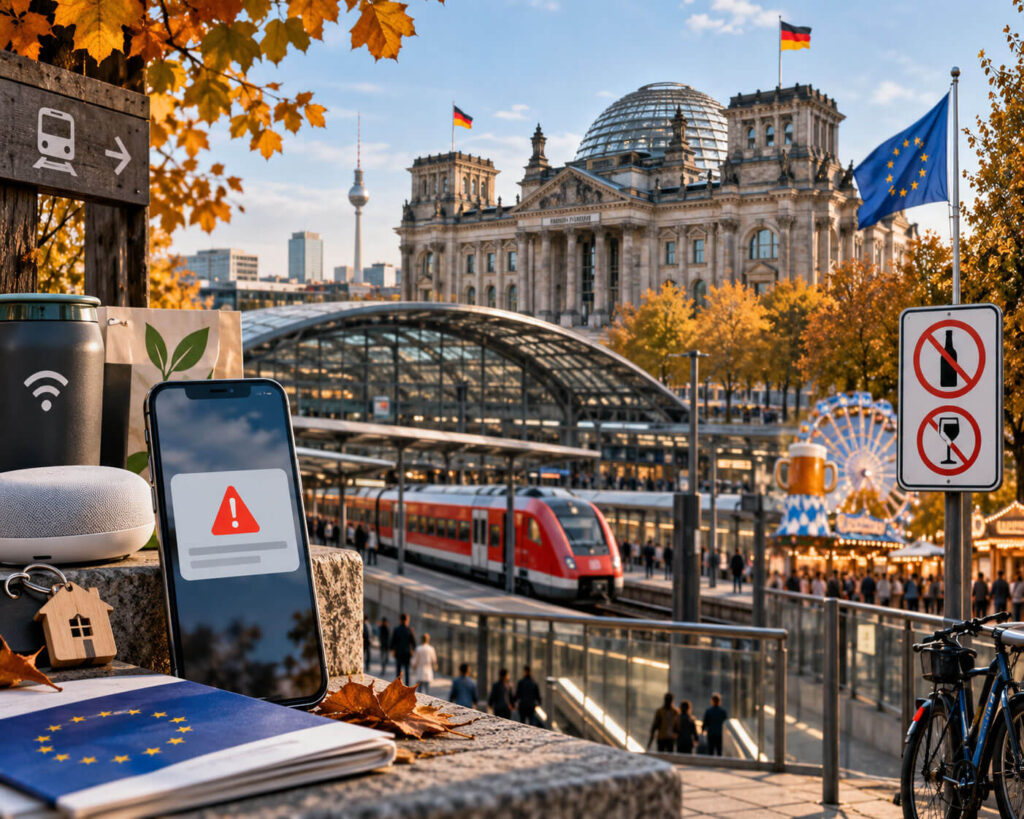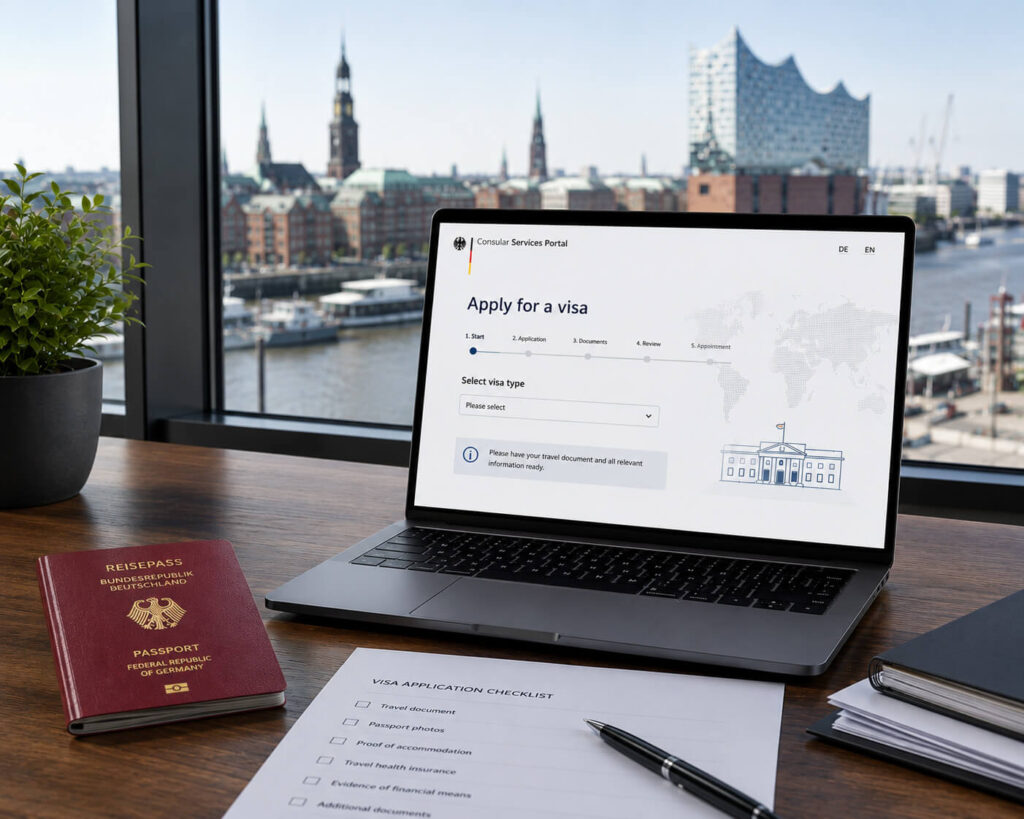
October brings several updates worth knowing if you live and work in Germany. Criminal record certificates are becoming available digitally, fuel taxes have been temporarily reduced, and new alcohol restrictions apply at Deutsche Bahn stations. There are also rail disruptions and seasonal reminders that could affect your plans.
Here is what matters, what you may need to do and where the details deserve a closer look.
1. German criminal record certificates go digital
Germany now offers a digital version of the Führungszeugnis, the criminal record certificate sometimes requested by employers.
The digital certificate is delivered as a PDF to your BundID account. According to the Federal Office of Justice, it has the same legal validity and evidential value as the printed version. Paper certificates remain available.
To apply digitally, you need suitable electronic identification, such as an electronic residence permit with the online identification function, a compatible smartphone and a BundID account.
There is an important limitation: the digital option covers certificates for private purposes. A certificate intended for direct submission to a German authority cannot be issued through this digital route. Check which type you have been asked to provide before applying.
For international professionals changing jobs, this could make one part of the paperwork easier. It does not mean every employer or authority needs the same document.
2. Fuel tax relief runs until the end of December
Germany has temporarily reduced energy tax on petrol and diesel from 1 October to 31 December 2026.
The reduction is 14.04 cents per litre before the associated VAT effect. Including VAT, the total tax relief amounts to approximately 17 cents per litre.
That does not guarantee an identical reduction at every petrol station. Fuel taxes are only one component of the price, and suppliers decide how the lower tax burden is reflected at the pump.
If you drive to work or use a vehicle for your business, comparing local prices remains worthwhile.
3. Alcohol consumption is restricted at DB stations
From 15 October 2026, an alcohol consumption ban applies at all Deutsche Bahn stations.
The restriction concerns drinking alcohol in station areas covered by DB’s house rules. Catering establishments are generally exempt, and passengers may still carry sealed alcoholic drinks in their luggage or shopping.
DB says repeated violations can result in a station ban.
For commuters and occasional travellers, the practical message is straightforward: pay attention to station notices and distinguish between carrying a closed bottle and drinking it on the premises.
4. Berlin–Hanover journeys take longer
Engineering work on the Lehrte–Berlin corridor began on 2 October 2026.
During the current construction phase, scheduled to run until 12 December 2026, long-distance services between Hanover and Berlin face diversions and journey extensions of approximately 60 to 80 minutes. Some stops and services are also affected.
The wider project continues into 2027, with different arrangements across its construction phases.
If you are travelling for a job interview, client meeting or immigration appointment, check the connection for your specific travel date. Leave enough time for the final journey from the station, particularly when missing an appointment would be difficult to resolve.
5. Winter tyres depend on road conditions
October is a sensible time to check your tyres, but Germany does not have a blanket legal requirement to fit winter tyres on 1 October.
The obligation depends on conditions. When roads have black ice, packed snow, slush, ice or frost, the applicable winter tyre requirements must be met.
Qualifying tyres carry the Alpine symbol, showing a mountain and snowflake. The familiar “October to Easter” rule is a planning reminder rather than a legal deadline.
If this is your first autumn driving in Germany, check your tyres before temperatures fall. For a rental or company vehicle, confirm that it is equipped for the conditions you expect.
6. Targeted restrictions on certain PFAS substances begin
From 10 October 2026, EU restrictions apply to PFHxA, its salts and related substances in specified consumer products, including clothing and footwear.
These rules set concentration limits for particular substances and uses. They should not be described as a complete ban on all PFAS chemicals. Transitional provisions and exemptions also apply, including provisions concerning products already placed on the market.
For most households, this is mainly a product safety update. For businesses importing or selling affected goods, it is a reason to check product specifications and supplier compliance.
7. The clocks go back on 25 October
Germany’s summer time ends on Sunday, 25 October 2026, when clocks move back from 3:00 a.m. to 2:00 a.m.
Most connected devices adjust automatically. International meeting times still deserve a check, particularly if colleagues, clients or family live in countries that do not change their clocks on the same date.
What should you check this month?
Start with the updates that affect your own circumstances. Confirm which criminal record certificate you need, review upcoming rail journeys and check your vehicle before winter conditions arrive. If you run a business selling affected consumer goods, review the relevant product restrictions.
Living in Germany involves keeping track of practical changes alongside your residence and employment requirements. If you need advice about your immigration position, employment-related residence options or business plans, contact Jaberi Lawyers for guidance tailored to your circumstances.
Information checked on 15 October 2026. This article provides general information and does not replace individual legal advice.